You Won’t Believe How South Indian Temple Jewellery in Silver Is Transforming Modern Style
Imagine jewellery that is not merely an accessory, but a piece of history-a miniature sculpture brought to life. This is the enduring magic of South Indian temple jewellery. Originally designed for the deities of imposing South Indian temples, these ornaments are bathed in spiritual significance and unparalleled artistry. For centuries, this heritage was synonymous with opulent gold. But a stunning shift is in the making. Today, the divine grandeur of these ornaments has been reimagined in lustrous silver, and thus was born the captivating world of silver temple jewellery. This shift in base material makes the majestic artistry more approachable and allows more people to wear the rich cultural history of Traditional South Indian jewellery on them as they ride the wave of modern South Indian jewellery trends.
History and Royal Origins: Adorning the Divine
The roots of this jewellery trace back over a thousand years to the golden age of the great Southern dynasties, primarily the Cholas and Pandyas. These royal patrons lavished their temple deities with the most exquisite, chunky gold ornaments as offerings of devotion and symbols of their own wealth. Artisans, often housed within the temple complexes, meticulously crafted pieces inspired by the temple architecture itself, as well as the mythological figures and celestial dancers (Devadasis) who performed sacred rites.
This royal patronage cemented the jewellery’s cultural and religious significance. Motifs were not mere decoration; they were sacred symbols. The depiction of Goddess Lakshmi, the lotus (kamala), the elephant (gaja), and the stylized mythical lion (yali) were believed to invoke prosperity, purity, and protection. Every piece, from the imposing necklaces (Aaram) to the intricate waist belts (Vaddanam), was a wearable blessing, a tangible link between the human and the divine.
Evolution from Traditional to Contemporary
The past differentiator was the material: pure, heavy gold, often in 22-karat purity, which made the jewellery an heirloom but at the same time an investment meant only for a select few. This has been democratized in modern evolution. Today, the rise of silver temple jewellery offers the same breathtaking detail and cultural depth at but a fraction of the cost.
The key to this modern transition lies in materials and technique. Artisans now use high-purity 92.5 silver as the base metal and often give it an elegant, aged appearance through an antique finish temple jewellery process; at times, with a coat of gold plating to regain the original gold lustre. This shift preserves the intricate sculptural feel while introducing a material more compatible with contemporary wear and budget.
Distinctive Features: Artistry and Symbolism
What really makes South Indian temple jewellery stand out is the combination of craftsmanship with the cultural symbols it depicts.
-
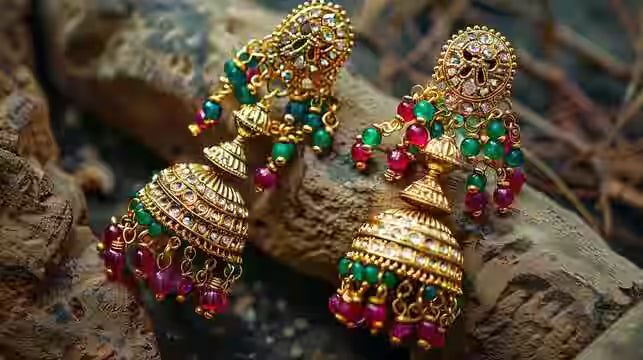
Materials & Finish: While the gold aesthetic remains popular through plating, the core appeal of silver temple jewellery is its deep, often oxidized, lustre. The stones traditionally used are unpolished, cabochon-cut rubies and emeralds, known as Kemp stones. These deep-red and bottle-green stones are quintessential to the authentic look, lending a warm, vibrant contrast against the metal.
-
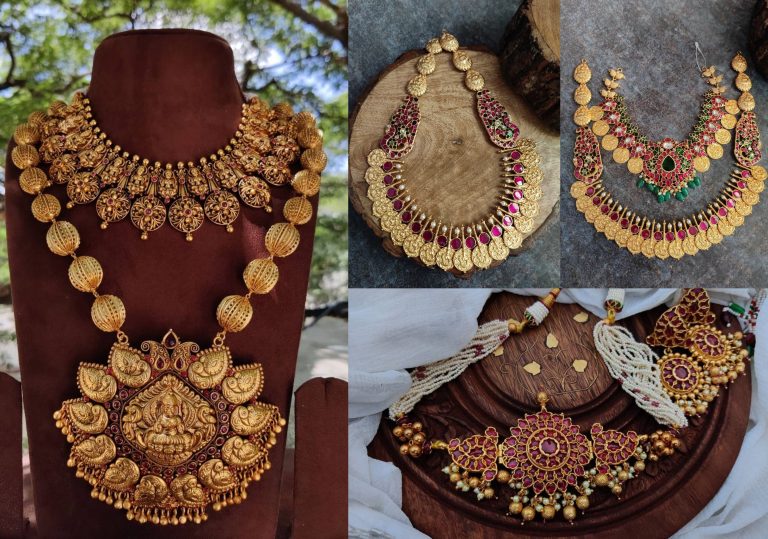
Craftsmanship: Nakshi Work - The masterly carving technique called Nakshi work is the mark of identification. This minute hand-engraving outlines the mythological motifs, such as the seated Goddess Lakshmi or the beautiful peacock, in striking three-dimensional relief against mere flat and stamped jewellery.
- Symbolism: Wearing them is an act of cultural piety. A coin necklace, Kasumalai, for instance, may carry many of its miniature Lakshmi or Ram-Parivar motifs that connote wealth and propitiousness, making silver Temple jewellery designs much more than just ornaments.
Modern Style Icon: The New Fashion Statement
From being a traditional accessory, the Silver Temple jewellery of today has emerged as the most sought-after accessory in modern South Indian jewellery. It is no longer restricted to weddings and classical dances but has become a statement piece among fashion influencers, brides of all regions, and women who want to carry a little bit of royalty with them in their day-to-day life. The striking contrast of oxidized silver and colorful Kemp stones provides a bold eclectic appeal that goes well with a modern maximalist fashion sense.
Styling Tips: From Sarees to Denim
The versatility of silver temple jewellery has made it a modern-day wardrobe essential:
- Traditional Glamour: pair a heavyweight, choker-type necklace with jhumkas along with a classic Kanjivaram or Banarasi saree. Let the necklace be the focal point of attention.
- Indo-Western Chic: Team a long, single-strand haar or an ornate silver cuff with a plain black turtleneck or fitted blazer for a powerful, fusion look.
- Bohemian Edge: Layer multiple thin silver chains with statement silver temple jewellery above a plain cotton tunic or a maxi dress. An oxidized finish gives the final touches of rustic charm.
- The minimalist version would be to skip the entire set and wear a single large, elaborate jhumka to elevate a simple kurta-jeans ensemble instantly.
FAQs
1. What is the main difference between traditional and silver temple jewellery?
A. Traditional form was made exclusively in 22-karat gold and was very expensive, as it was used for deity or royal adornment. Silver temple jewellery uses 92.5 silver as its base, thus being more inexpensive and lighter, while retaining traditional designs and Kemp stone work.
2. How do I care for my antique finish temple jewellery?
A. Store your pieces in an airtight box or pouch away from moisture and direct sunlight. Avoid contact with perfumes, hairsprays, and harsh chemicals, for they may strip the gold plating or damage the antique finish of the temple jewellery over time. Use a soft dry cloth for cleaning the pieces.
3. Is "Kemp" a type of precious stone?
A. Generally, "Kemp" stones refer to synthetic or semi-precious varieties-like spinel-traditionally cut into a certain cabochon style: rounded, unfaceted, deep red or green, representative of traditional South Indian temple jewellery aesthetics. They're valued for their colour and opacity, not their monetary worth.
4. Can I wear silver temple jewellery for non-traditional events?
A. Of course! This is one of the major modern South Indian jewellery trends. Either large jhumkas or a single, bold necklace will perfectly give a sophisticated and cultured touch to cocktail parties, formal dinners, or even business casual wear, adding a unique Traditional South Indian jewellery flair.
Conclusion
The shift to silver temple jewellery is more than a trend; it's a brilliant fusion of ancient craft and modern practicality. It invites you to wear a piece of divine history, making the elaborate, spiritually significant designs of Temple jewellery designs in silver part of your personal style.
Experience the majesty of Southern heritage for yourself. Explore Ekadhi’s exclusive collection of intricately crafted silver temple jewellery, featuring breathtaking pieces in Premium CZ, Victorian, Nakshi, Moissanite, and vibrant colourstone settings today!